Sunday, April 15, 2018

Is 1 a prime number?

Is 1 a prime number?

 There are lots of confusion about the primality of the number one.
 So, naturally the question arises that is 1 a prime number?

The short answer is: no.
Yes it's simply  'no'!
   
1 is not prime number
Now let's prove our answer with mathematics.
Before we discuss the reason behind this , we shall recall the definition of a prime number.
    Definition: A prime number is a positive integer (natural number), which is greater than 1 and has exactly two factors 1 and the number itself. As for example, 2,3,5,7,11 etc.
    The definition can be stated in another way that: a prime number is a natural number (>1), which can not be expressed as the product of two smaller natural number both smaller than that number.
   
Prime number
     Here, from the definition, the point to be noted that , 2 is the smallest prime number. So, every prime number is greater than 1. Thus  , we can't say 1 as a prime number.
 On the other hand, one can not be expressed as the product of two smaller natural numbers both smaller than 1 (as 1 is the least natural number).
 So, in this case also 1 failed to prove himself as a prime number.

  There are some other theories which  also prove that one is far more special than a prime number.
   (1) one is the unit of the positive integers.
   (2) one is the only multiple identity.
   (3) one is the smallest natural number.
   (4) one is the smallest positive integer which merits its own existence  by peano's axiom.
    (5) one is the only positive integer  which has only one factor or divisor 1.
    (6) The fundamental theorem of arithmetic states that,
"Every positive integer greater than one can be written uniquely as a product of primes, with the prime factors in the product written in order of nondecreasing size".
   Here we find the most important use of primes. They are the unique building blocks of the multiplicative group of integers. In discussion of warfare you often hear the phrase "divide and conquer." The same principle holds in mathematics. Many of the properties of an integer can be traced back to the properties of its prime divisors, allowing us to divide the problem into smaller problems. The number one is useless in this regard because a = 1 ×a = 1 ×1 ×a =1×1×1×a= ... That is, divisibility by one fails to provide us any information about a .

     Here, the interesting fact is , 1 is also not a composite number(a number which is not a prime number).
  So 1 is neither a prime number nor a composite number; it's unity!!!
  
 If you find out any incorrect information or know anything more about this , please write it in the comment section!
    

Saturday, April 14, 2018

Magic of 9

Magic of 9

Hello!!!
   We are talking about nine(9), the biggest one digit decimal member of the natural number family (N).
Magic of 9

      It is the second non unitary square prime number of the form:P² (P square).
    Some interesting facts about 9 are:
   (1) 9 is an exponential factor[9={(3)²}¹].
    (2) The sum of digits of any multiple of 9 is 9.
            2×9=18 and 1+8=9
            3×9=27 and 2+7=9
            4×9=36 and 3+6=9
             .................................
             9×9=81 and 8+1=9
             ..................................
  121×9=1089 and 1+0+8+9=18 and 1+8=9
           and so on...
    (3)
           12345679×9=111111111
           12345679×18=222222222
           12345679×81=999999999
            ..............................................
This is true for all multipliers of 9.
     (4) The difference between a 10 base positive integer and sum of its digit is a integral  multiple of 9.
       e.g. sum of digits of 41=5
                and 41-5=36 and 36=9×4, which is an integral multiple of 9.
      (5)
            73, 7+3=10
            793, 7+9+3 =19 and 1+9=10.
            7993, 7+9+9+3=28 and 2+8=10.
      (6) The sum of digits of a number added with 9 is always equals to the sum of the digits of the result.
           56+9=65 and sum of the digits of 65=11 , sum of the digits of 65=11.
      (7) 9 can be expressed in some interesting ways:
       9=1!+2!+3!
       9=25-16= square of 5- square of 4.
       9=cube of 1+ cube of 2.
     (8) The digits of any number which is divisible  by 9 , can be rearranged in any manner and the resulting number will be also divisible by 9.
         As for example, 567 is divisible by 9.
Now, if we rearrange the digits 5,6,7 in any manner we get 576,657,675,765,756. These all are divisible by 9.
       (9) The expression 'nine times out of ten' describes a likely probability.
       (10) If we arrange the digits 0-9 in a vertical column and the digits 9-0 in another vertical column parallel to the previous column and then add  the elements in each row; we get 9 as result in each row.
       0  + 9 =9
       1  + 8 =9
       2  + 7 =9
       3  + 6 =9
       4  + 5 =9
       5  + 4 =9
       6  + 3 =9
       7  + 2 =9
       8  + 1 =9
       9  + 0 =9.
        There are many surprising facts of 9 of such type.
      There were 9 planets in the solar system, before 2006(when Pluto was rejected as a planet).
      The atomic number of fluorine is 9.
       In Hindu philosophy , there are 9       universal elements named   water,earth,Air,fire,ether,time, space,soul and mind.
       The Nine(9) of Diamonds is called “The Curse of Scotland”. Many different stories are told about this card.
      The ninth sign of the Zodiac is Sagittarius; identified by the Greeks as a centaur which is a combination of a half human and a half horse. Centaurs are magical creatures known for their skills as archers, philosophers, and predictors of the future. Being the ninth sign of the zodiac, Sagittarius has been associated with the astrological ninth house.
     Navaratri is a 9 day festival dedicated to 9 forms of Durga.
   The Double Ninth festival is an old Chinese tradition celebrated on the ninth day of the ninth lunar month. In Taiwan this day is also dedicated to the senior citizens.
The festival is associated with chrysanthemums. Poems and paintings of chrysanthemums are made.Chrysanthemum tea and wine are enjoyed.
It is also traditional to hike in the mountains on this day. In the Gregorian calendar the Double Ninth festival falls in the month of October.
     In the English calendar the 9-th month is September. Coincidentally, "September" has 9 letters. So, the 9-th month has 9-th letter.
     According to yoga the human body has 9 doors.
    A human baby takes 9 months to develop in his/her mother's womb.
     So 9 is a symbol of life and creation!!!

  
 If you find out any incorrect information or know anything more about this , please write it in the comment section!
    

Fibonacci sequence

Fibonacci sequence

Fibonacci sequence
Fibonacci numbers

Fibonacci sequence history:

     1, 1, 2, 3, 5, 8, 13, 21,34 ,55,89...
Yes , You are right!
We are going to talk about the  Fibonacci sequence, the mystery!!!
     We all know that, though Fibonacci ( Leonardo Pisano Bigollo) introduced this sequence first to the western world in 1202; it had been observed by the Indian mathematician as early as the sixth century.

 Fibonacci sequence facts:  

The most interesting property of this sequence is, the next term/number of the sequence is the sum of the previous two.
   It doesn't wait to say that this sequence is very important in mathematics. It has a strange correspondence with the Pascal Triangle.It is observed that, the sum of entries in nth diagonal of Pascal's triangle is the nth Fibonacci number (for all positive integer n)!!!
     
Fibonacci sequence
Fibonacci sequence

Fibonacci sequence in nature:

  There are such a many known-unknown facts about the Fibonacci sequence in mathematics as well as in nature.
   We all are familiar with the Rabit- Island story. Fibonacci considered the growth of an idealised or biologically unrealistic population of rabbits.He made some assumptions like:
(1): A newly born pair(one male and one female) of rabbit are put in a island.
(2): every pair can mate at the age of one month and can  produce a new pair.
(3): The rabbits never dies and mating pair always produces a new pair each month.
  Assuming these, Fibonacci observed the growth of the population of rabbits. His query is very simple: how many rabbits will be there after  one year?
  At the end of first month, the pair mates but there is till only one pair.
  At the end of second month the pair produces a new pair. So there is two pairs at the end of second month.
  At the end of third month the original pair produces a new pair and the previous newly born pair mates.so there is 3 pair in total at the end of third month.
  At the end of forth month the original pair and  their first born pair each produces a fresh pair. So there is total 5 pairs at the end of forth month.
 In the same process after the end of twelve months or a year a total 233 pair of rabbit are found.

     
Fibonacci sequence
Fibonacci sequence in nature
In this case we observe that the population of rabbit follow the Fibonacci sequence.(search on Google for more details)

Fibonacci sequence in art:

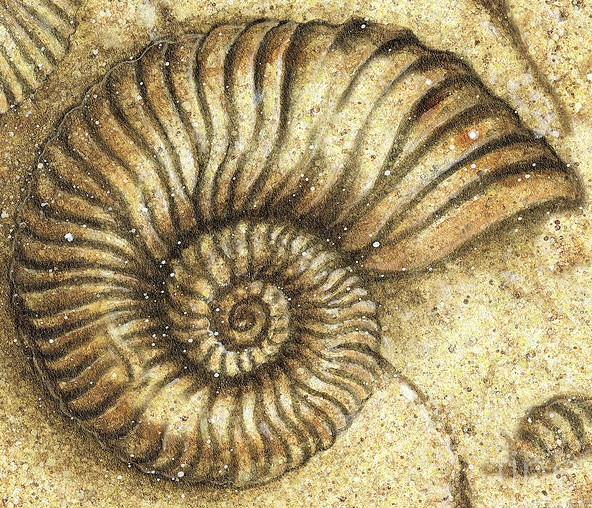
  There are many more natural objects and events which follows the Fibonacci sequence.some of them are : Aloe plant, Buena Mulata pepper, sunflower, snails, falling water,shell fossil, etc.
Fibonacci sequence


Fibonacci sequence

Fibonacci sequence

           So, the Fibonacci sequence is in many places in nature. The intersting fact is it is also found in human body!
 Our hands, foot,ear follows the Fibonacci sequence. We have 2 hands with 5 fingers each and our 8 fingers have 3 section (excluding the thumbs). similarly our foot also agrees with Fibonacci sequence.

Fibonacci sequence list:

    At last , we wants to highlight one more thing that, often in modern usage the Fibonacci sequence is extended by one more initial term 0.
i.e, the extended form of Fibonacci sequence(Fibonacci numbers) is:
 0, 1, 1, 2, 3, 5, 8, 13, 21, 34, 55, 89, 144, 233, 377, 610, 987, 1597, 2584, 4181, 6765, 10946, 17711, 28657, 46368, 75025, 121393, 196418, 317811, ...
  
 If you find out any incorrect information or know anything more about this , please write it in the comment section!
    

Most Recent

Quadratic equation

 Quadratic equation  •A polynomial equation of degree two is called a quadratic equation. • General form of a quadratic equation (variable ...

Most Liked